What Most People Get Wrong About Diamonds
A closer look at how the modern diamond market actually works — and why many common assumptions miss the bigger picture.

Ledger Analysis
Most people only encounter diamonds a few times in their lives.
———
An engagement ring. Maybe an anniversary gift. Occasionally a family piece that gets passed down through generations.
Because of that, most of what people think they know about diamonds comes from advertising, headlines, or whatever information happens to surface during the short window when someone is shopping for one.
But the reality of the diamond market is much more interesting than most people realize.
Once you step behind the counter and see how the system actually works, you discover that diamonds sit at the intersection of geology, global trade, craftsmanship, and a surprising amount of science.
And like most industries that operate quietly in the background, the public version of the story is only part of the picture.
Where Diamonds Actually Come From
Every natural diamond begins the same way — deep beneath the earth.
Most of the stones we see today were formed billions of years ago under immense heat and pressure far below the surface. Ancient volcanic activity carried them closer to the crust, where modern mining operations can reach them.
Today, the majority of natural diamonds come from places like Botswana, Canada, South Africa, and Russia.
From there, the stones move into a global trading network where they’re sorted, evaluated, and distributed to cutting centers around the world.
By the time a finished diamond appears in a jewelry store, it may have passed through several countries and multiple specialists along the way.
Where the Beauty Actually Happens
One of the biggest misconceptions about diamonds is that their beauty comes mainly from size or color.
Those things matter, of course. But the single most important factor in how a diamond looks is the quality of the cut.
Cutting a diamond is where physics meets craftsmanship.
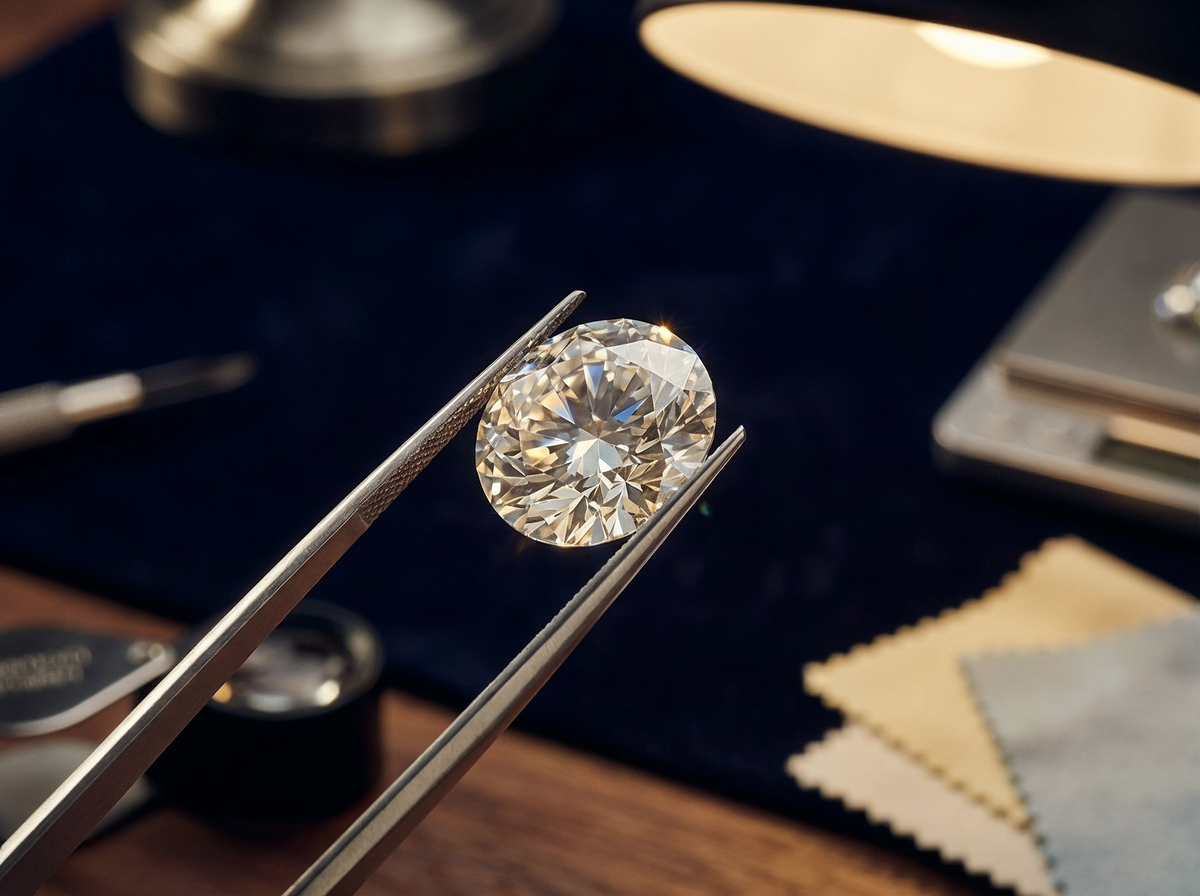
The angles of the facets determine how light enters the stone, how it reflects inside the diamond, and how it returns to the eye. Small changes in those angles can dramatically change how bright or lively a diamond appears.
That’s why two diamonds with nearly identical specifications on paper can look completely different once they’re set in a ring.
In many ways, the cutting process is where the real transformation happens — where a rough crystal becomes something extraordinary.
The Market Is Smaller Than People Think
Another surprise for many people is the size of the industry itself.
Diamonds feel culturally enormous. They’re tied to engagements, weddings, and some of the most meaningful moments in people’s lives.
But in purely economic terms, the global diamond market is actually quite small compared to industries like gold, energy, or electronics.
What gives diamonds their presence isn’t scale — it’s concentration of value.
A relatively small number of stones can represent a tremendous amount of worth. That’s why the trade moves through specialized networks of cutters, dealers, laboratories, and jewelers who understand the material intimately.
Where the Jeweler Fits In
By the time a diamond reaches a jeweler, most of the global supply chain has already done its work.
But the final stage is where the stone becomes something personal.
Two people can choose diamonds with very similar specifications and end up with completely different pieces of jewelry depending on how the stone is selected, designed, and set.
That final step is part technical knowledge and part creative judgment.
And despite all the technology now involved in grading and imaging diamonds, that human element still matters more than most people expect.
Why Diamonds Continue to Fascinate
Diamonds occupy a strange and fascinating place in the modern world.
They can be measured with incredible precision — with grading systems, spectroscopy, and advanced imaging tools that reveal microscopic details inside the stone.
At the same time, they remain deeply emotional objects.
Few things carry the same symbolic weight as a diamond ring given at the beginning of a marriage or passed down through generations of a family.
That combination of science, rarity, craftsmanship, and human meaning is what has kept diamonds relevant for centuries.
And it’s also what makes the industry far more interesting than most people assume at first glance.