The Strait That Carries the World: Why the Strait of Malacca Matters More Than You Think

The Quiet Artery of Global Trade
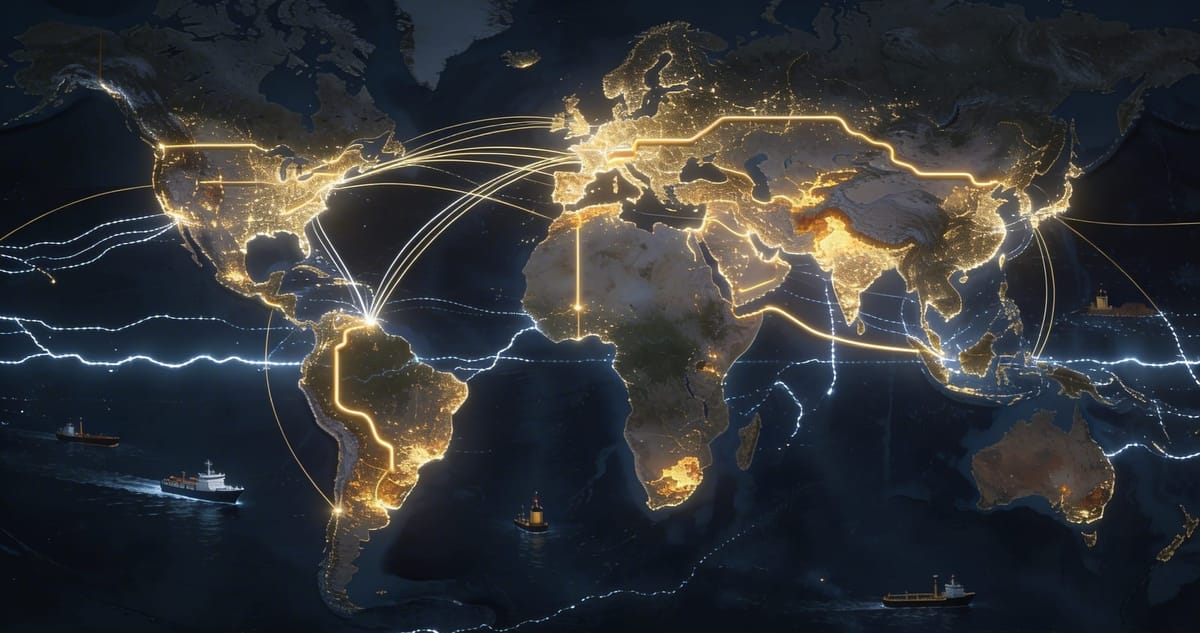
The modern global economy depends on a small number of physical infrastructure systems spanning oceans and continents.
Every day, thousands of ships pass through a narrow body of water between Malaysia and Indonesia known as the Strait of Malacca.
Most people have never heard of it.
Yet this corridor quietly moves roughly one quarter of global traded goods.
Oil.
Electronics.
Rare earth minerals.
Manufactured goods.
Much of the modern economy passes through a channel only 1.7 miles wide at its narrowest point.
If global trade has arteries, the Strait of Malacca is one of the most vital.
Why Geography Still Controls the Modern World
Despite satellites, digital commerce, and global finance networks, trade still depends on physical geography.
Cargo must move through specific passages.
These passages are known as maritime chokepoints — narrow corridors where a disruption can affect global markets.
The Strait of Malacca connects two massive economic regions:
• The Indian Ocean
• The South China Sea
For Asian manufacturing economies — including China, Japan, and South Korea — it is the shortest maritime route to energy supplies from the Middle East.
This means that energy security for much of Asia depends on a passage barely visible on most maps.
The Energy Lifeline
An estimated 15–17 million barrels of oil per day move through the Strait of Malacca.
To put that in perspective:
That volume represents one of the largest energy flows on the planet.
Tankers from the Persian Gulf pass through the strait on their way toward Asian refineries.
Any disruption here could ripple through:
• global oil markets
• shipping costs
• manufacturing supply chains
Energy markets tend to respond quickly to geopolitical tension near critical corridors.
The Vulnerability Few Talk About
The Strait of Malacca has three characteristics that make it uniquely sensitive:
1. Narrow geography
Large vessels must follow tightly controlled shipping lanes.
2. Extreme traffic density
More than 80,000 ships transit the strait annually.
3. Limited alternative routes
The next viable routes add thousands of miles to global shipping journeys.
If a disruption forced ships to reroute around Indonesia, transport costs could rise significantly.
This would ripple through global supply chains.
Why Nations Pay Close Attention
Because of its strategic importance, the strait is closely watched by major naval powers.
The surrounding region includes three key coastal nations:
• Malaysia
• Indonesia
• Singapore
Together they coordinate maritime security operations to protect shipping.
At the same time, global powers monitor the corridor closely because of its role in international commerce.
The Larger Pattern
The Strait of Malacca illustrates a broader truth:
Modern globalization still depends on a surprisingly small number of physical corridors.
A handful of maritime passages quietly support enormous volumes of trade.
These chokepoints are rarely discussed outside shipping or defense circles, yet they shape the stability of global supply chains.
Understanding where these corridors exist — and how they function — provides a clearer view of how the modern economy actually operates.