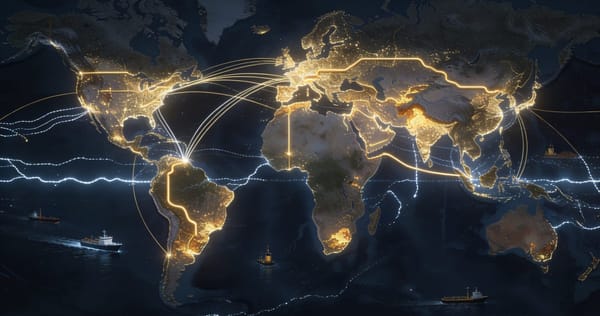
The Semiconductor Map
The handful of regions where most of the world’s semiconductor chips are designed and manufactured.

Ledger Report
Most of the world’s technology depends on a surprisingly small number of places.
———
A handful of regions design and manufacture the tiny chips that power modern life — from smartphones and data centers to cars, aircraft, and medical equipment.
And nearly all of them sit along the same stretch of the map.
Semiconductors don’t move through shipping lanes the way oil or goods do.
Instead, they move through specialized ecosystems — places where advanced manufacturing, engineering talent, and billions of dollars of fabrication equipment are concentrated.
And those ecosystems are rare.
The Core Manufacturing Centers
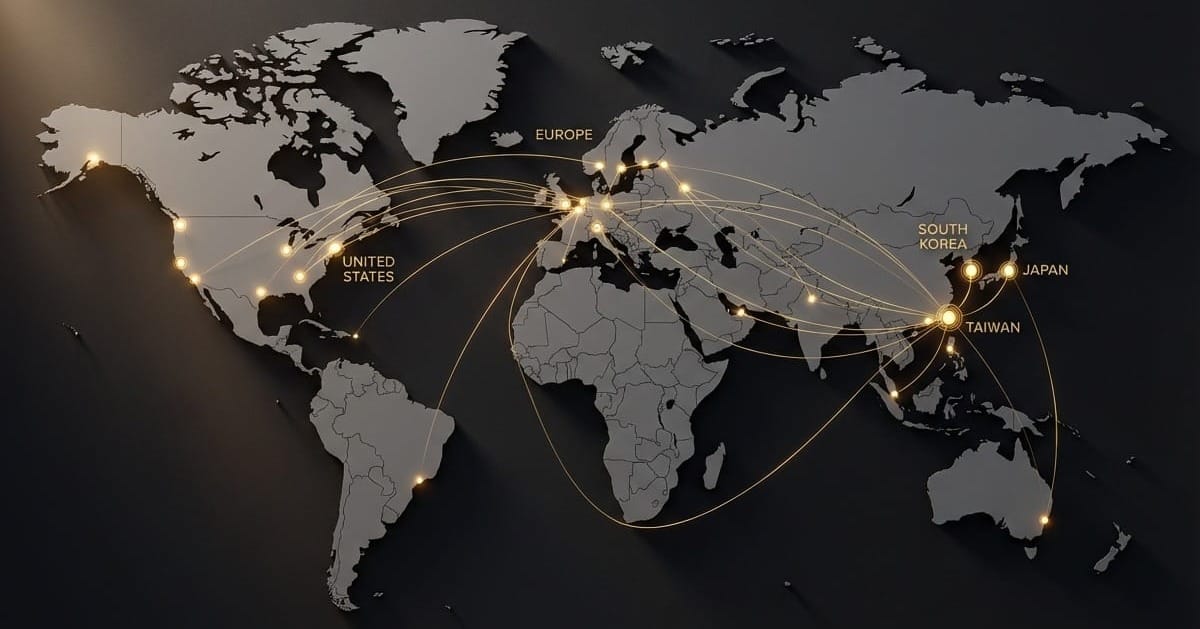
The most advanced chips in the world are produced primarily in Taiwan and South Korea.
Taiwan’s fabrication plants manufacture a huge share of the high-performance chips used in everything from artificial intelligence systems to modern smartphones.
South Korea plays a similar role, especially in memory chips used in computers, servers, and consumer electronics.
Together, these two countries sit at the center of the modern semiconductor supply chain.
Design Happens Elsewhere
While fabrication is concentrated in East Asia, much of the design work happens elsewhere.
The United States remains the global hub for chip architecture and design. Many of the world’s most important semiconductor companies are headquartered there, even if their chips are manufactured abroad.
Europe and Japan contribute specialized equipment and materials that are critical to the manufacturing process.
In other words, the semiconductor system is global — but not evenly distributed.
Why the Map Matters
Building a semiconductor fabrication plant is one of the most complex industrial projects on earth.
Facilities cost tens of billions of dollars and require years to construct.
They rely on extremely specialized equipment and tightly controlled environments.
Because of this, production capacity cannot easily be moved or replaced.
Which means that a small number of places quietly sit at the center of the modern digital economy.